how-to-choose-between-oil-immersed-transformer
Topic: Oil-immersed Transformers vs. Dry-type Transformers – How to Choose Without Getting It Wrong?
Ⅰ. First, Understand: What Is the Core Difference Between the Two?
In one sentence: Different cooling and insulation methods result in vastly different application scenarios.
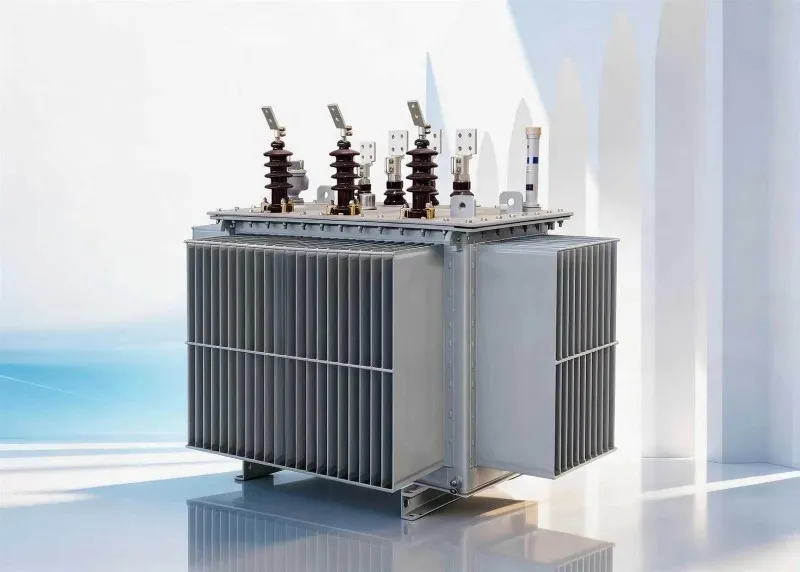
- Oil-immersed transformers: Use transformer oil as both insulating and cooling medium. Heat is dissipated through oil convection, which circulates and transfers heat away via the tank walls and radiators.
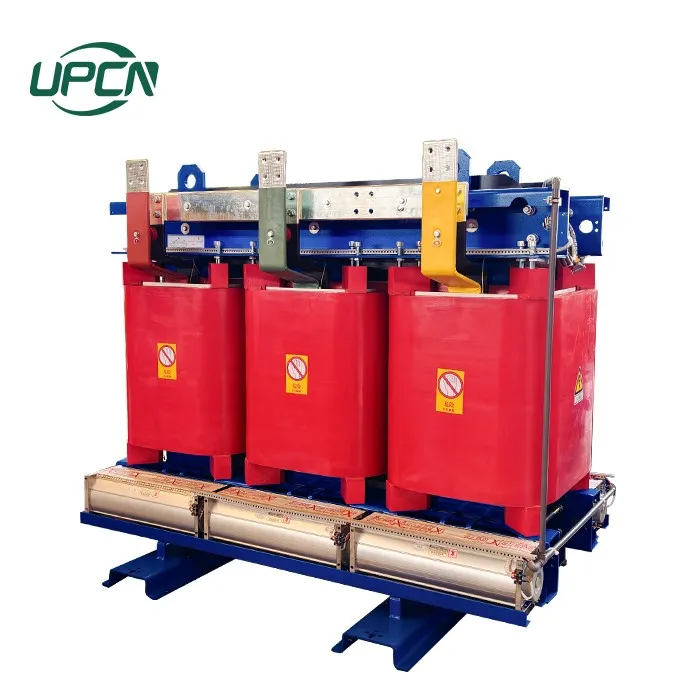
- Dry-type transformers: Use air as the cooling medium, relying on air convection for heat dissipation. Coil insulation typically employs epoxy resin casting or vacuum impregnation.
Ⅱ. Performance Comparison: A Table to Clearly See the Pros and Cons
|
Comparison Item |
Oil-immersed transformer |
dry-type transformer |
|
Insulating/cooling medium |
transformer oil |
Air / Epoxy resin |
|
Fire and explosion resistance |
Poor, with leakage and combustion risks |
Excellent, oil-free, flame-retardant, and explosion-proof |
|
noise level |
relatively low |
relatively slightly higher |
|
Maintenance difficulty |
Regular oil replenishment, testing, and leakage prevention are required |
The maintenance is minimal, basically maintenance-free |
|
floor area |
A separate oil pool/explosion-proof room is required, which occupies a large space |
It can be installed directly indoors, taking up little space |
|
price cost |
Lower under the same capacity |
"Higher under the same capacity" |
|
service life |
The design lifespan is typically 20-30 years |
The design lifespan is typically around 20 years |
|
Applicable scenarios |
Open areas such as outdoors, substations, and factories |
Indoor densely populated places such as residential area distribution rooms, office buildings, hospitals, and shopping malls |
Ⅲ. Core Scenario Selection Guide (copy directly)
✅ Situations where "oil-immersed transformer" is preferred
1. It should be installed in open, non-densely populated areas such as outdoors, factory areas, and substations.
2. The project budget is sensitive, and there are no stringent requirements for noise levels or maintenance frequency.
3. With a large single unit capacity (such as above 1000kVA), there is a pursuit for higher heat dissipation efficiency and cost control.
4. It has relaxed requirements for land occupation and can set up independent oil pools and fireproof spacing.
✅ Situations where "dry-type transformer" is preferred
1. Installed in indoor densely populated places such as residential area distribution rooms, office buildings, hospitals, shopping malls, and subways.
2. The project has strict requirements for fire and explosion prevention, as well as fire safety.
3. Due to the limited installation space, it is not feasible to set up an independent oil pool and maintain a safe clearance.
4. There is a shortage of manpower for post-maintenance, and it is hoped that the equipment will be maintenance-free and have a low failure rate.
Ⅳ. Common Misconceptions and Pitfalls to Avoid
1. Misconception: Is dry-type transformer necessarily safer than oil-type transformer? Not necessarily. Dry-type transformers pose no fire hazards and are suitable for indoor use; however, oil-type transformers, when installed and maintained properly, are equally safe outdoors, with better heat dissipation and stronger overload capacity.