


If you’ve ever worked with commercial or industrial electrical systems, you know that a transformer isn’t just a box that converts voltage—it’s the quiet backbone of reliable power delivery. As a supplier of dry type transformers, I field at least a few questions every week from engineers, facility managers, and project leads asking the same thing: What exactly are the standards for a 400 KVA dry type transformer? It’s a fair question, especially when getting the specs wrong can lead to overheating, premature failure, or even safety hazards that shut down operations for days.
I’ve spent the last decade working with power distribution equipment, and I’ve seen firsthand how sticking to rigorous standards separates a transformer that lasts 20+ years from one that needs replacing in 5. The 400 KVA size is a sweet spot for a lot of applications: small manufacturing facilities, grocery store chains, multi-unit residential buildings, and even small data centers often rely on this capacity to power lighting, HVAC, machinery, and backup systems. That’s why getting its specifications right isn’t just about meeting code—it’s about protecting the people and assets that depend on that power.
First, let’s start with the core: KVA rating. A 400 KVA dry type transformer’s rated capacity is the maximum apparent power it can deliver continuously at its specified voltage and frequency without exceeding temperature limits. But the KVA alone doesn’t tell the whole story. Standards bodies like the Institute of Electrical and Electronics Engineers (IEEE) and the International Electrotechnical Commission (IEC) set the baseline for this, and every transformer I supply is built to exceed those minimums. For context, our smaller 30 KVA dry type transformer is built for light-duty applications like small office buildings, while our larger 1250kVA dry power transformer handles heavy industrial loads—each sized to match the unique demands of its end user, and the 400 KVA is calibrated right in the middle for balanced, consistent use.
Next, temperature rise is non-negotiable for dry type units, since they don’t use flammable liquid insulation to dissipate heat. IEEE Standard C57.12.00 is the main benchmark here, and for dry type transformers, temperature rise limits depend on the insulation class of the winding material. Most 400 KVA units use Class F insulation, which can handle up to 155°C before degrading, with a maximum temperature rise of 105°C when measured by resistance (the most accurate way to test winding heat). For locations with high ambient temperatures—like a factory in the American Southwest or a basement utility room that traps heat—we adjust the design to ensure the transformer doesn’t hit unsafe temps. I always remind customers that cutting corners on insulation class or temperature testing is a false economy; a transformer running too hot will lose efficiency, wear out faster, and void any warranty.
Voltage and impedance standards are another critical piece. A 400 KVA transformer’s primary and secondary voltage must match the site’s distribution system. Most common configurations are 480V primary to 208Y/120V secondary for commercial spaces, or 12kV primary to 480V secondary for industrial facilities. Impedance, the measure of how much the transformer resists current flow during a short circuit, is also standardized: for 400 KVA dry type units, typical impedance ranges from 4% to 5.75%. Why does this matter? Impedance determines how much fault current will flow if a short happens, which in turn dictates what kind of circuit breakers you need to protect the system. Too low an impedance, and the circuit breaker might not trip fast enough during a fault, damaging the transformer. Too high, and you’ll get voltage drops when starting large motors or heavy equipment. Our 630 KVA epoxy resin transformer uses a similar impedance design, scaled up for higher capacity, so we have a range of tested specs to match different site needs.
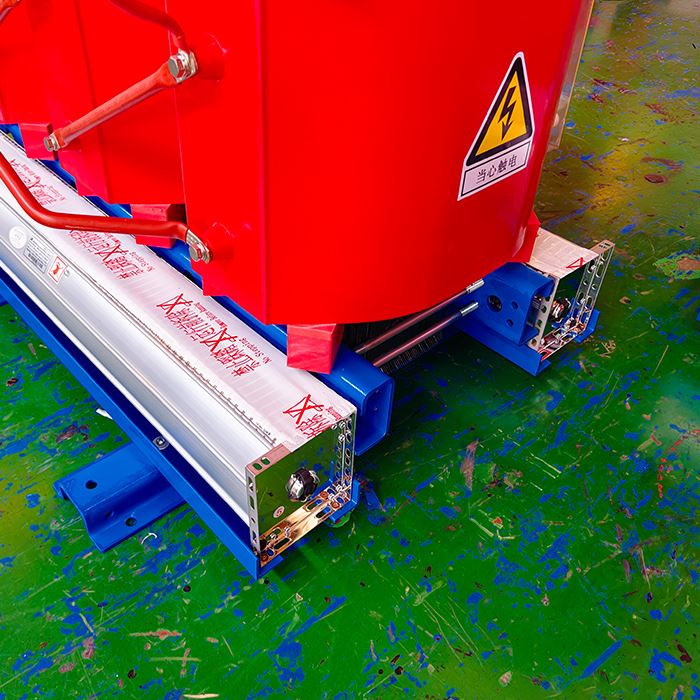

Enclosure type and ingress protection (IP) standards are often overlooked, but they’re make-or-break for where a transformer is installed. Dry type transformers come in different enclosures, and each has a standard rating. For indoor use in a clean utility room, an IP20 enclosure (which blocks fingers and solid objects larger than 12.5mm) is standard, since it keeps out dust and accidental contact with live parts. For outdoor installations or dirty environments like construction sites or food processing plants, we use IP54 enclosures, which protect against dust ingress and splashing water. The National Electrical Code (NEC) also has requirements for indoor placement, including clearance around the unit for maintenance, so specs around enclosure size and ventilation are never afterthoughts. I’ve seen customers buy a cheap 400 KVA unit only to have to replace it 2 years later because it was installed in a dusty warehouse without a proper sealed enclosure—something that’s avoidable by sticking to IP standards.
Efficiency and load loss standards are another key part of 400 KVA transformer specifications. Transformer efficiency measures how much input power is converted to output power, minus losses from winding resistance and core magnetism. For dry type units, standards set minimum efficiency levels to reduce energy waste, which translates to lower utility bills for the owner. A 400 KVA transformer should have a full-load efficiency of at least 98.5% at rated load, and higher at partial loads (since most transformers don’t run at 100% capacity 24/7). For example, a facility that only uses 250 KVA of a 400 KVA unit will see better efficiency from a well-designed transformer that’s optimized for partial loads, not just full load. Our 300 KVA dry type transformer is calibrated similarly for its size, with efficiency specs tailored to typical operating loads, so we have data on how different capacities perform across use cases.
Short circuit withstand capability is a safety and durability standard that’s often tested to destruction. IEEE C57.12.59 outlines the requirements for how much short circuit current a transformer can withstand for a set period without permanent damage. For a 400 KVA unit, this means being able to handle a short circuit current of around 20 times the rated current for 2 seconds, depending on impedance. This is critical because short circuits can happen from faulty wiring, equipment malfunctions, or power grid surges, and a transformer that can’t handle this will develop winding deformities, leading to failure. All our units undergo type testing at accredited labs to confirm this capability, a step I never skip when working with customers who prioritize long-term reliability.
Environmental and sustainability standards are also gaining more attention in the industry, and rightfully so. Dry type transformers don’t have the fire risk of oil-filled units, which makes them a safer choice for dense areas, but there are still standards for materials and emissions. For example, the EU’s RoHS directive restricts hazardous substances like lead and mercury in electrical equipment, and many projects in the U.S. now require transformers to meet EPA standards for recycled materials. Our 50 KVA dry type transformer, for smaller applications, is built with these standards in mind, and all our 400 KVA units use copper windings (more efficient than aluminum) that are fully recyclable at the end of their life.
Wait, let’s address a common misconception here: many people think all 400 KVA dry type transformers are the same, but that couldn’t be further from the truth. Two units with the same KVA can have different voltage ratios, insulation classes, enclosures, and efficiency ratings, all of which depend on the standards they’re built to. That’s why it’s important to work with a supplier that can tailor the specs to your exact project, not just sell a one-size-fits-all unit. For example, a 400 KVA transformer for a small grocery store needs to handle refrigeration compressors and ovens, which have high starting loads, so we’ll adjust the impedance and design to avoid voltage drops. A 400 KVA unit for a data center backup system needs to run 24/7 with minimal downtime, so we’ll use higher-grade insulation and extra ventilation to extend its lifespan.
I’ve had customers come to me after buying a generic 400 KVA unit online, only to find out it doesn’t meet local electrical codes. For example, some states require dry type transformers above a certain KVA to have a minimum fire-resistant enclosure, or to be listed by Underwriters Laboratories (UL). UL listing is another key standard: every unit we supply is UL-listed, which means it’s been tested to meet strict safety standards for electrical equipment. Skipping UL listing might save a few dollars upfront, but it can lead to code violations, insurance issues, and dangerous conditions.
Let me walk you through a recent project to put this in perspective. A community college in Ohio was renovating its student center and needed a 400 KVA transformer to power new lecture halls, a cafeteria, and a fitness center. They initially tried to source a cheap unit from overseas, but after checking local code, they found it didn’t meet NEC requirements for enclosure IP rating and temperature rise. They reached out to me, and we worked together to build a UL-listed 400 KVA unit with Class F insulation, an IP20 enclosed cabinet, 480V primary to 208Y/120V secondary voltage ratio, and 5% impedance. We also added overload protection features and a 20-year warranty, which beat the generic unit’s 1-year warranty. The install went smooth, and the facility manager told me last month that the transformer is running at 98.7% efficiency, well above the minimum standard.
So, to wrap up, the standards for a 400 KVA dry type transformer boil down to a few core categories: KVA and voltage ratings, temperature rise and insulation, enclosure and ingress protection, efficiency, short circuit capability, and compliance with industry and local codes. It’s not just about hitting a number on a spec sheet—it’s about building a unit that’s safe, reliable, and built to last for decades.
If you’re working on a project that requires a 400 KVA dry type transformer, or you want to compare specs for a different capacity—whether it’s a smaller unit like our 30 KVA dry type transformer or a larger unit like our 1250kVA dry power transformer—we’re here to help. Every project is unique, and we can tailor the transformer specs to match your load needs, site conditions, and code requirements. Whether you need a unit for a commercial building, industrial facility, or multi-family residence, we have the expertise to guide you through the process and provide a transformer that meets all the necessary standards. Reach out to our team to discuss your project and get a custom quote that fits your needs.
References
- Institute of Electrical and Electronics Engineers (IEEE). (2020). Standard for General Requirements for Liquid-Immersed Distribution, Power, and Regulating Transformers. IEEE C57.12.00-2020.
- National Fire Protection Association (NFPA). (2023). National Electrical Code (NEC). NFPA 70-2023.
- Underwriters Laboratories (UL). (2022). Standard for Safety for Dry-Type Distribution and Power Transformers. UL 1561-2022.
- International Electrotechnical Commission (IEC). (2021). Power Transformers – Part 1: General Requirements. IEC 60076-1:2021.
- U.S. Environmental Protection Agency (EPA). (2020). Sustainable Design Guide for Electrical Equipment: Transformers. EPA 100-F-20-004.


